play
Remane
Taking a hair care startup from Dollar Tree prototype to Forbes.
A data-driven platform that helped people find personalized products, track their progress, and understand their own hair.
Highlights
Startup, User Research, Mobile App
Recognition
Forbes Next 1000, $18K+ raised
Timeline
2 years (2020-2022)
Role
CEO & Co-Founder
User research, IA, wireframing, usability testing, business design
The Problem
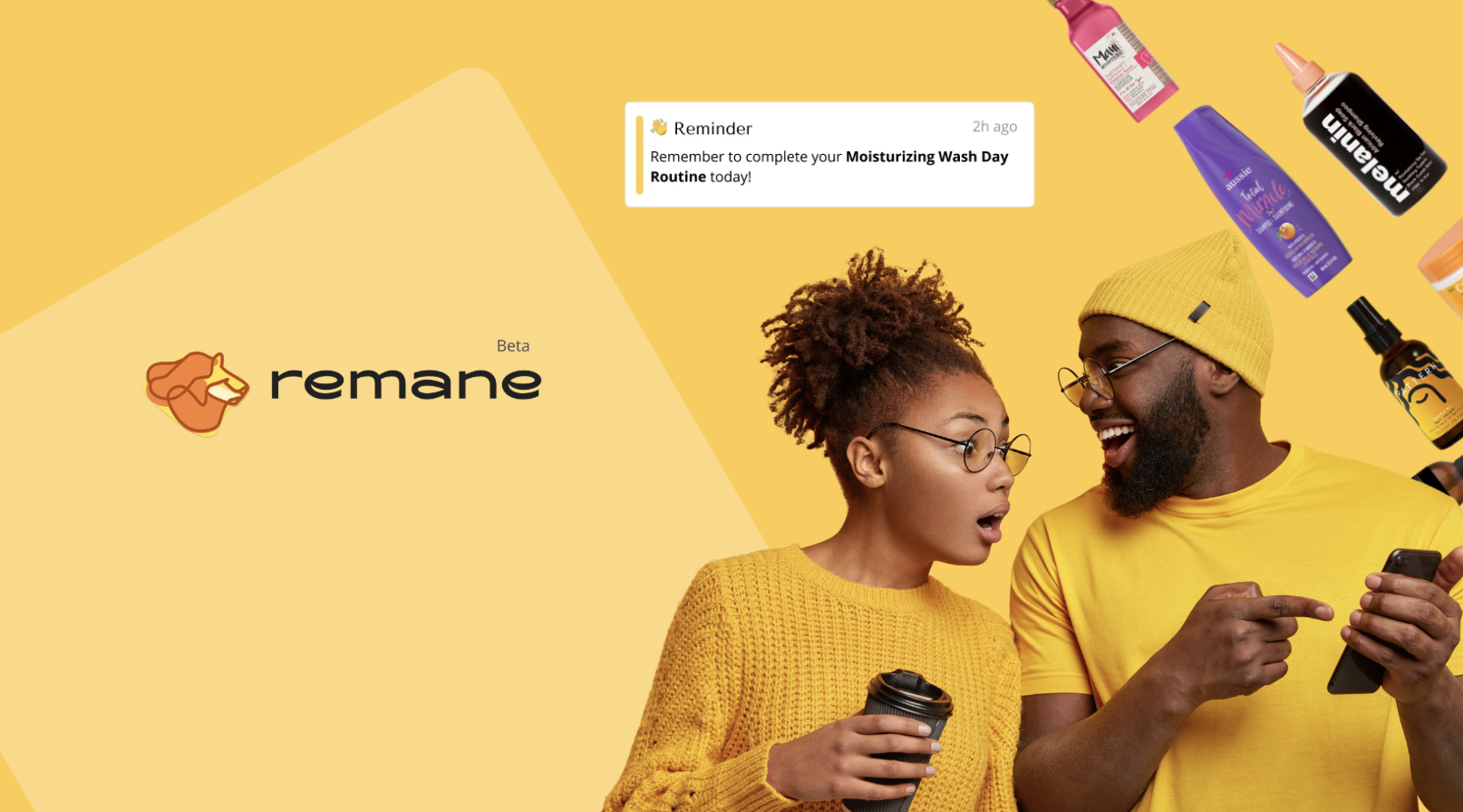
In 2021 I launched a haircare management platform
While we managed to maintain 100+ members in the first quarter of launch less than 25% had converted to paid members. This showed us we needed to pare back our features and focus on what was providing value to our users.
The Solution
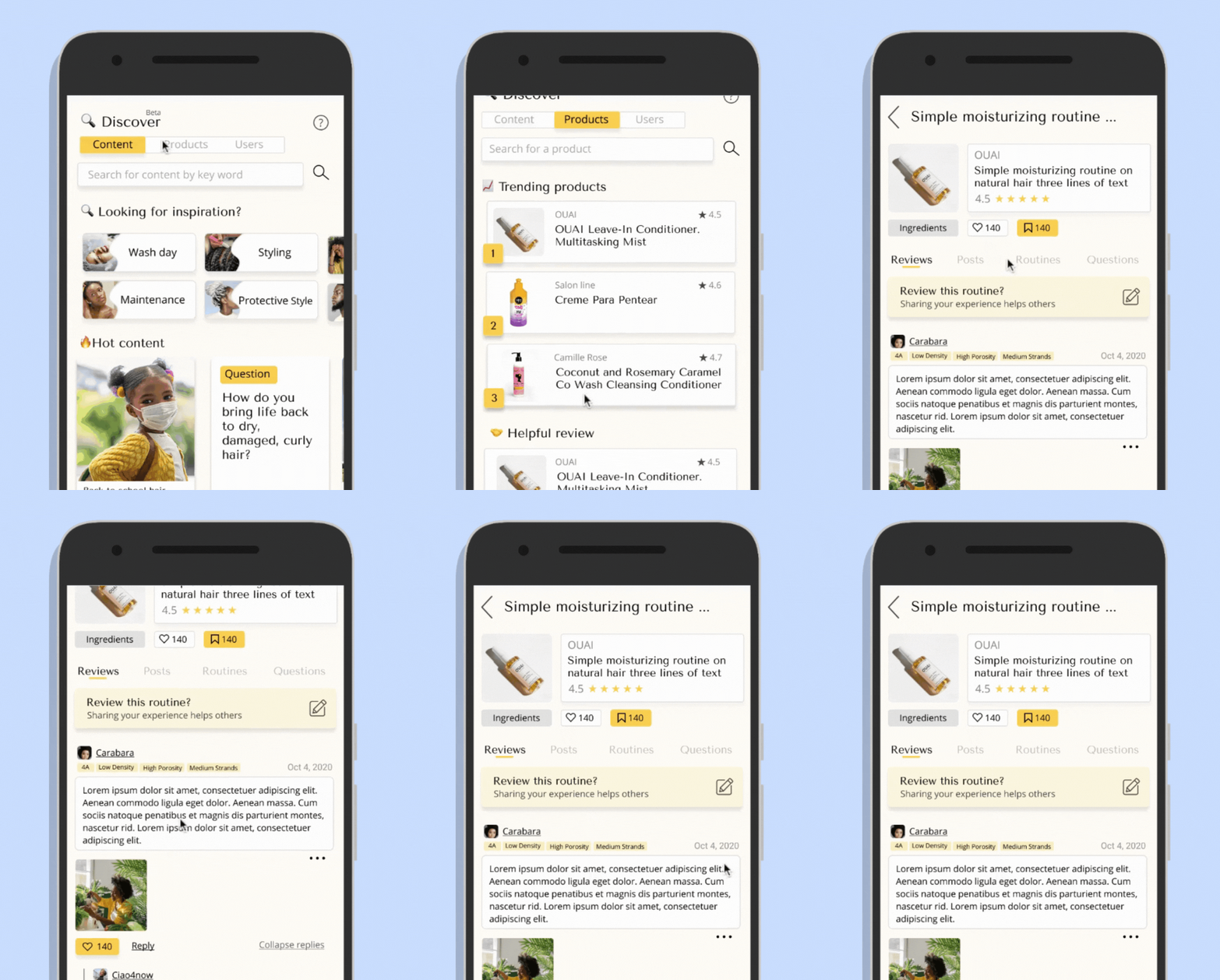
We pivoted the solution to focus on community, personalized content, and hair tracking over product recommendations
We realized users wanted to be connected to other folks who were similar to them to gather inspiration. We sought to build a platform that could facilitate the seamless sharing and tracking of hair inspiration and routines. Think of a recipe card for your favorite hairstyle.
The Research
I collected attitudinal and behavioral data through surveys—product spending, hair challenges, existing routines. I also tracked user sessions to understand what features were actually being used.
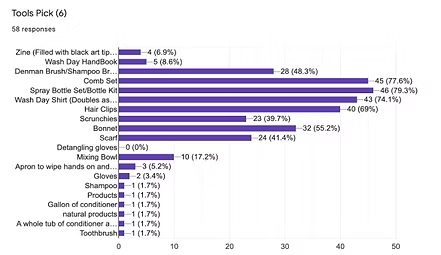
Raw survey data from user research
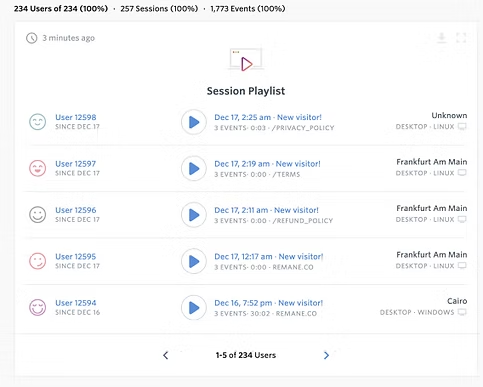
Session recordings to track feature engagement
Three numbers shaped everything:
73%
of early adopters were Black women aged 21-30 in the USA
$15
average price users were willing to spend on a single product
#1
concern was moisture and scalp health—not growth or length
The interviews surfaced what the numbers couldn't: the emotional dimension of the hair journey. Users weren't just looking for products. They were looking for a community of people who understood what they were going through.
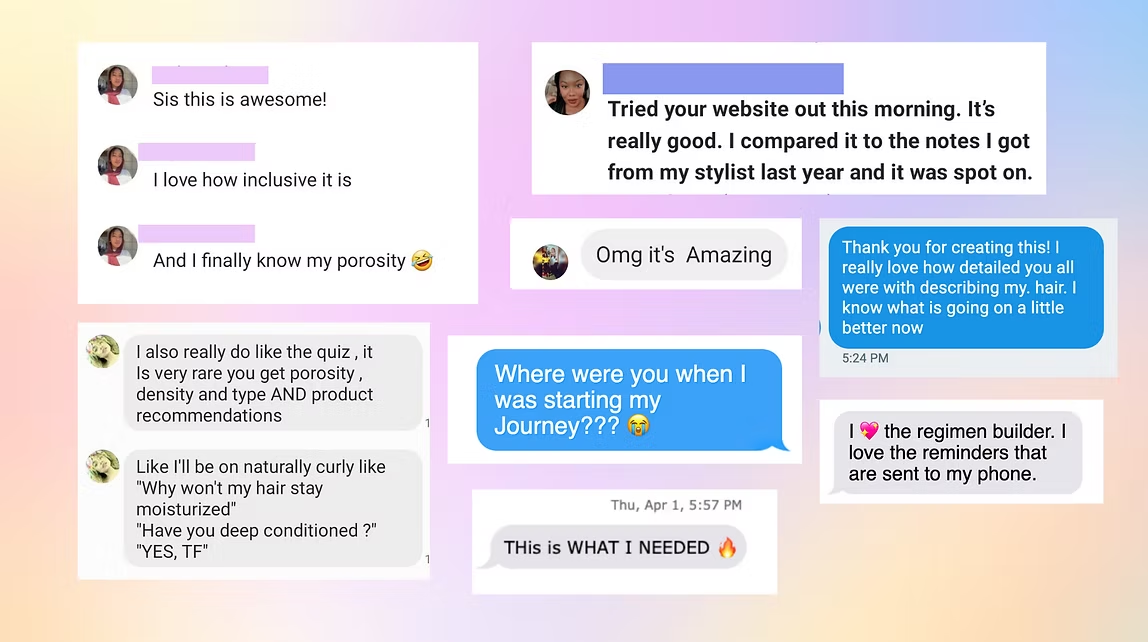
User feedback collected during research phase
The experience felt lonely. They wanted to find people with similar hair.
From Interviews to Action Items
I synthesized the interview insights into themes and then transformed them into actionable items on a Trello board for development prioritization.
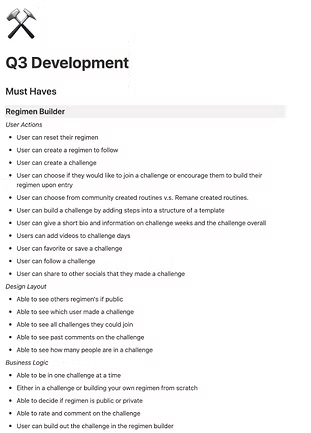
Interview synthesis organized by themes
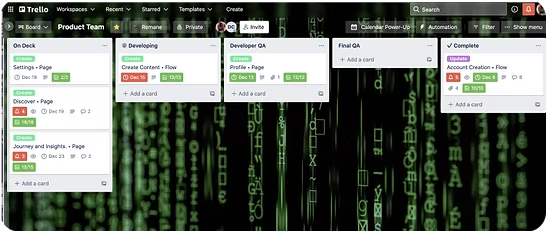
Trello board with action items highlighted in green
The Pivot
Based on the research, I made the call on what to change. I used a framework for sticky pivots: take what's working, leave what isn't, add what's missing.
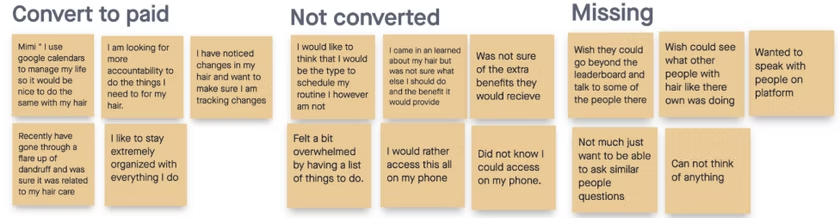
User research synthesis: why users did or didn't convert
What We Left
- • Un-contextualized product recommendations
- • Leaderboard and gamified features
- • Siloed experience
- • Complex messaging tools
What We Kept
- • Personalization and hair knowledge
- • Tracking and logging features
- • Ability to build custom routines
What We Added
- • Community features for sharing
- • Insights for consistent tracking
- • Enhanced product pages with usage inspiration
Information Architecture
I rebuilt the IA around the pivot. Working from least to most complexity, I wrote user stories about how users would move through the experience and what interactions would occur during each workflow.
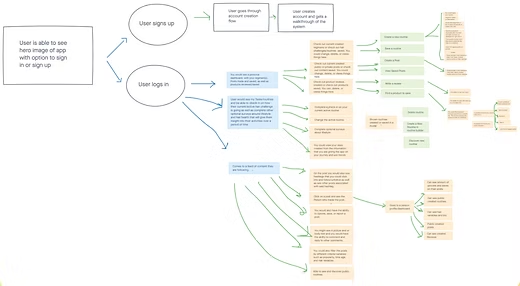
IA mapping user journeys through the pivoted product
Low Fidelity Sketches
Before jumping into digital wireframes, I sketched out the core flows on paper to quickly iterate on ideas.

Early sketches before high-fidelity designs
Wireframes & Usability Testing
I then created grayscale wireframes with a limited color palette, focused on the core flows. I tested with 8 users—both paying and free members—to understand if we closed the gaps from the auditing phase.
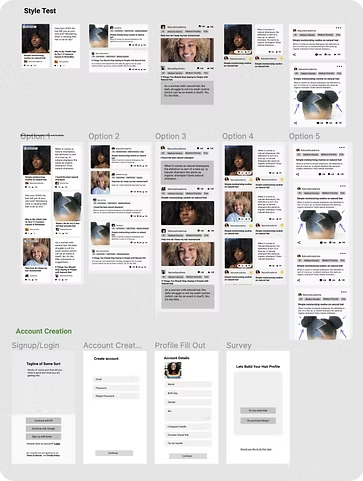
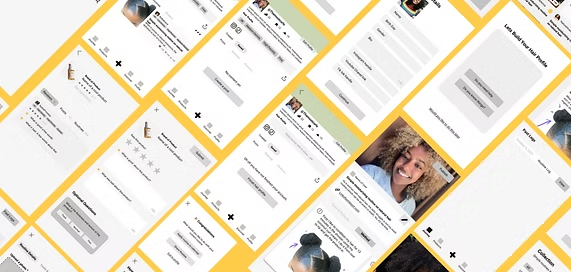
Low-fidelity wireframes tested with 8 users
How did the final solution work?
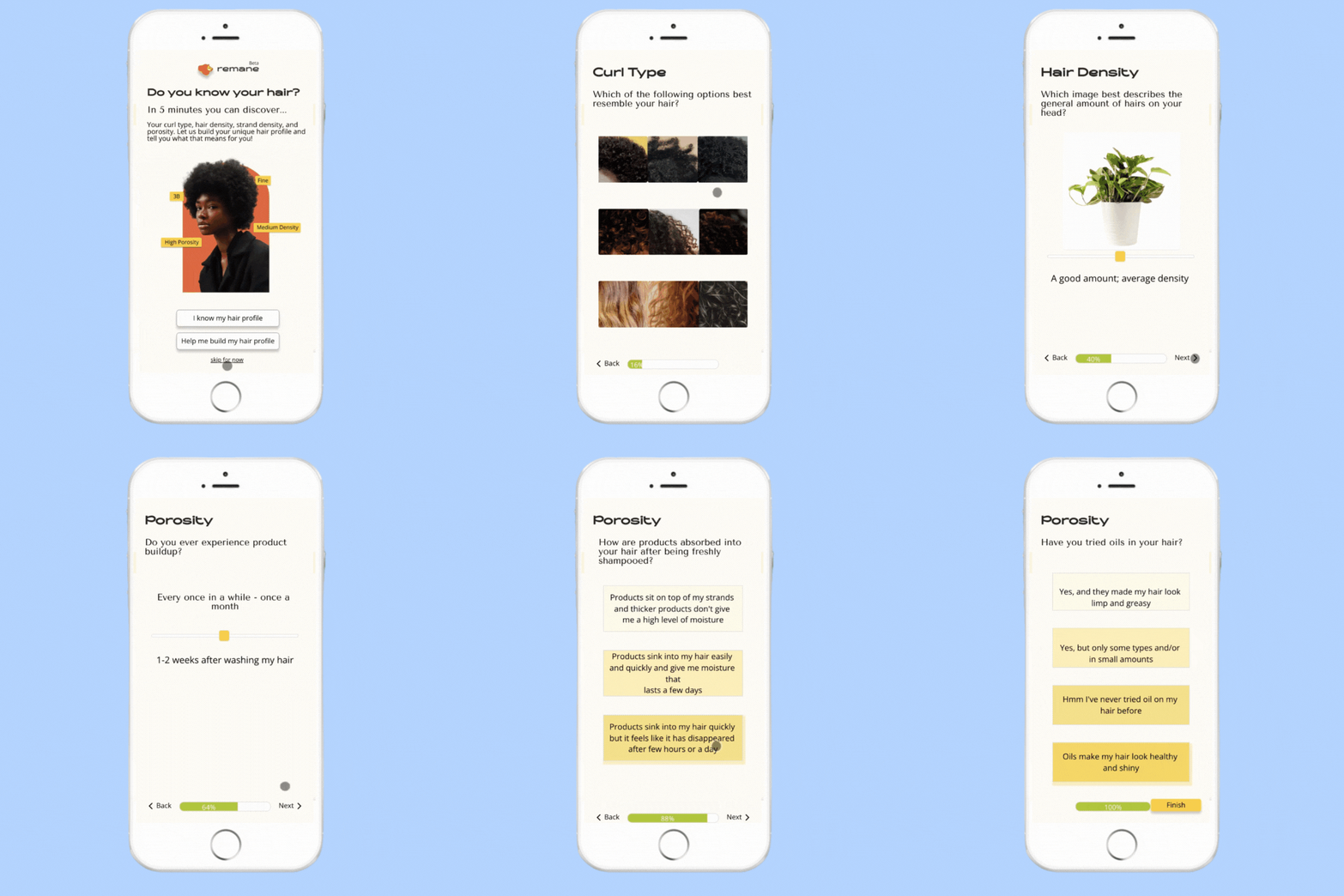
Using the branding and design language I created, I moved the mid-fidelity designs into higher fidelity. Here's how users flow through the experience:
Feature One
Learn
Users take our hair quiz and we build their hair profile, telling them about their unique curls—type, porosity, density, and personalized care tips.
Feature Two
Discover
Discover content and routines created by the Remane team as well as our community to help you along your journey.
Feature Three
Create
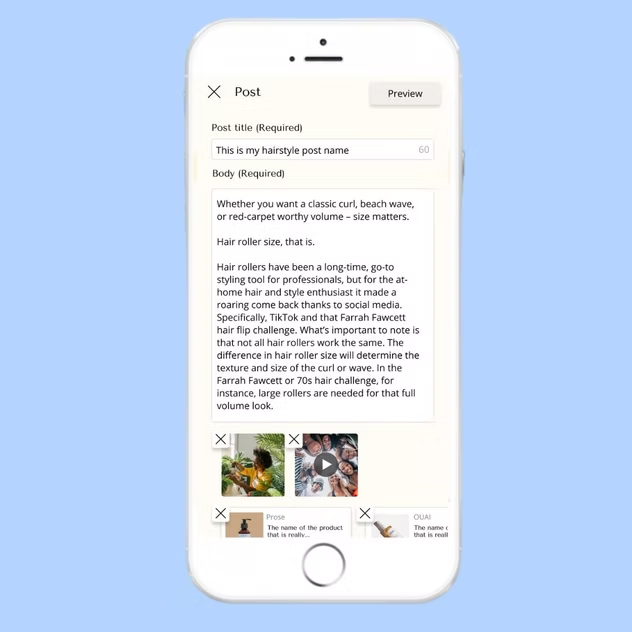
Create content, ask questions, and digitize your hair routines through videos and pictures. Share your journey with the community.
Feature Four
Track
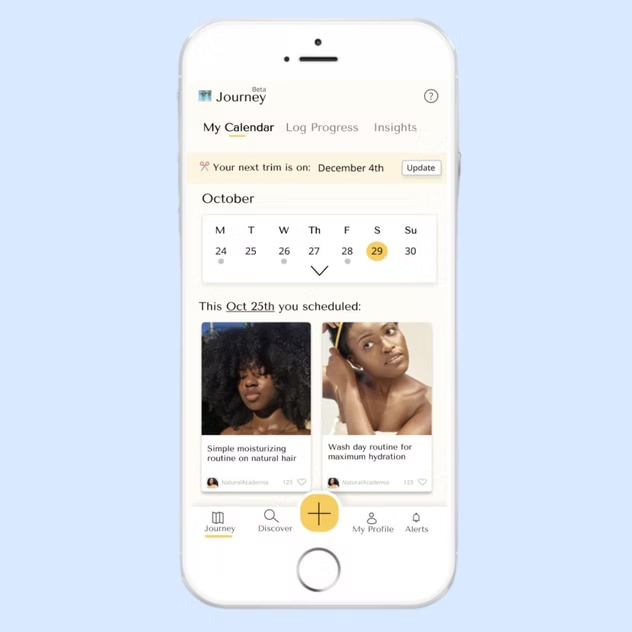
Track your hair journey and schedule your routine with our calendar. We provide insights on how you can improve your hair care routines over time.
Impact & Results
8K+
page views
1.9K
new user sessions
$18K+
funding raised
51%
email open rate
Organic growth: All traction achieved without any ad spend or social campaigns.
Customer Engagement: Built an email list of 945+ subscribers with high engagement.
Funding: Crowd-sourced, pitched, and negotiated for $18K+ in non-dilutive funding with 0% equity given up.
What started as a class project ended up featured in Forbes Next 1000, on the BBC, and Fox 7 Austin. We were invited to pitch at Target's Forward Founders accelerator.
This is where I learned to do UX for real—not from a textbook, but from building something people actually used and making it better one decision at a time.